












 Back to Blog
Calf Feeding Guide: From Birth to 6 Months for Healthy Growth
A calf born today is a milking cow in two years. The nutrition decisions you make in the first six months of that calf's life will determine how much milk she produces as an adult, how resistant she is to disease, and how long she remains in the herd. Investing in proper calf nutrition is not an expense — it is the highest-return investment a dairy farmer can make.
Colostrum: The First 6 Hours Are Critical
Colostrum is the first milk produced by the mother after calving, and it contains concentrated antibodies (immunoglobulins) that protect the newborn calf from infections. A calf must receive 2 to 3 litres of clean colostrum within the first 2 hours of birth, followed by another 2 litres within 6 hours. The calf's ability to absorb these antibodies through the gut wall decreases rapidly after birth and is virtually gone by 24 hours. Delayed or inadequate colostrum feeding is the single biggest cause of calf mortality and chronic poor health.
Milk Feeding Phase: Birth to 8 Weeks
After colostrum, feed whole milk or a quality milk replacer at 10 percent of the calf's body weight daily. For a 35-kilogram calf, this means approximately 3.5 litres per day, divided into two feedings. Gradually increase to 5 to 6 litres by week 4. Always use clean buckets or nipple feeders, and ensure milk temperature is close to body temperature (38 to 39 degrees Celsius). Cold milk causes digestive upset and scours.
Introducing Creep Feed: Week 1 Onwards
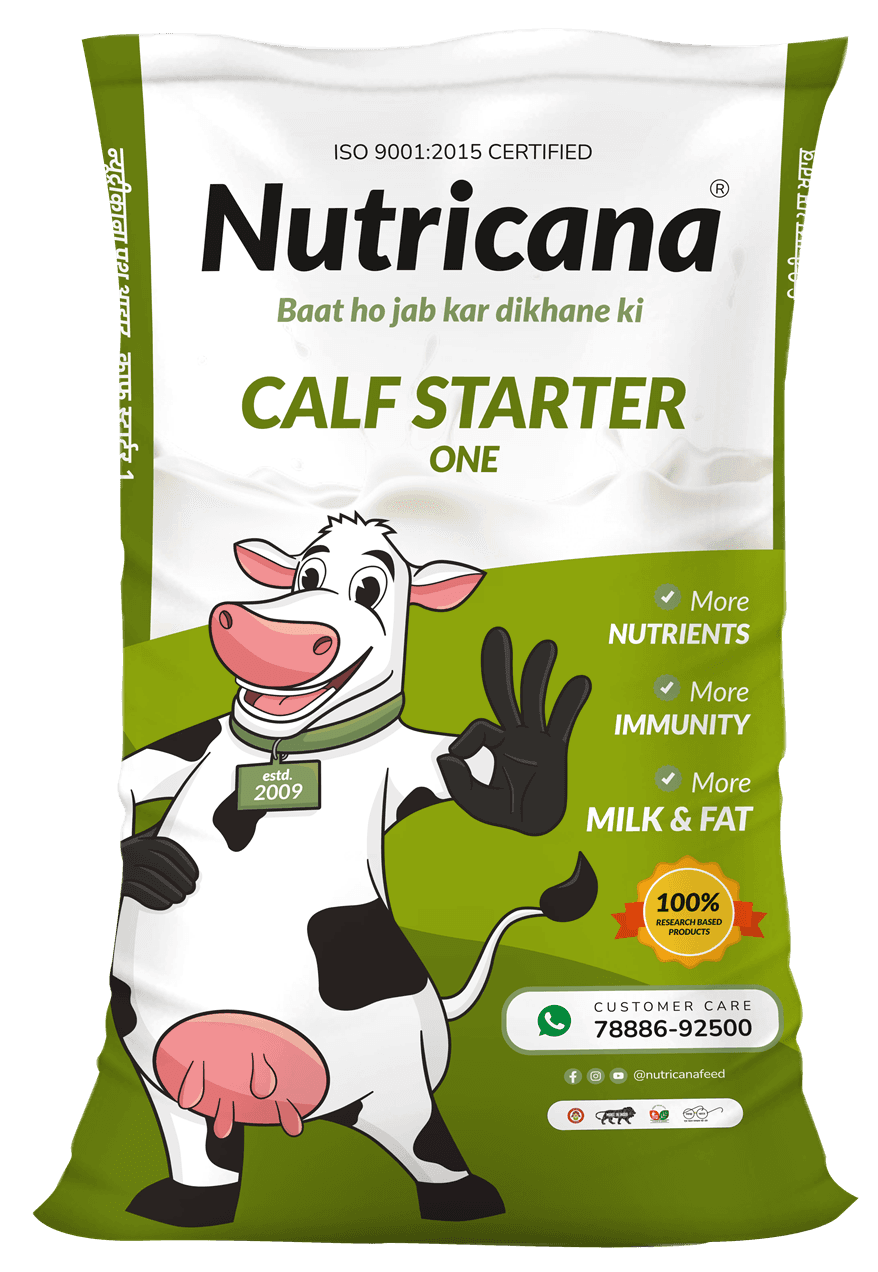
Offer a small quantity of high-quality calf starter feed from the very first week. Calves will not consume much initially, but early exposure stimulates rumen papillae development — the tiny finger-like projections in the rumen that absorb nutrients. Without early grain intake, the rumen does not develop properly, and the calf will struggle to transition from liquid to solid feed. Nutricana's Calf Starter is formulated with 22 percent crude protein and highly palatable ingredients to encourage early intake.
The Weaning Transition: Week 6 to 12
Begin reducing milk gradually when the calf consistently consumes 750 grams to 1 kilogram of calf starter per day. A step-down approach works best: reduce to one milk feeding per day for a week, then stop entirely. Abrupt weaning causes stress, reduces growth rates, and increases susceptibility to respiratory disease. During weaning, ensure clean water and good-quality hay are always available alongside the calf starter.
Post-Weaning Growth: 3 to 6 Months
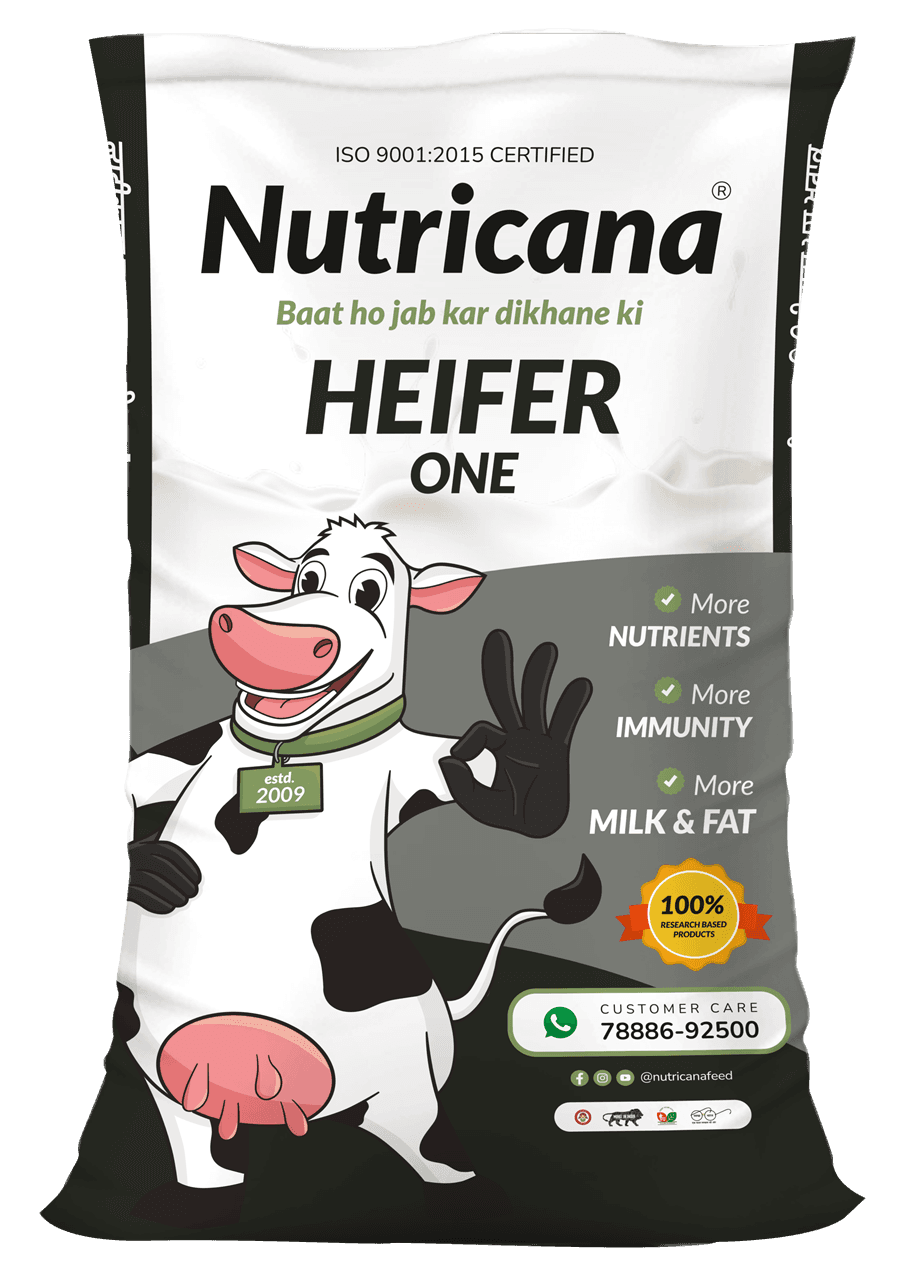
After weaning, transition from calf starter to a calf grower feed like Nutricana's Calf Grower, which provides 18 to 20 percent crude protein with balanced minerals for skeletal development. Target a daily weight gain of 600 to 800 grams. Introduce green fodder gradually, starting with tender berseem or lucerne. Monitor growth by measuring heart girth monthly — a heifer should double her birth weight by 60 days.
Common Calf Rearing Mistakes
Feeding colostrum too late, using dirty feeding equipment, providing insufficient water, weaning too early or too abruptly, and neglecting deworming are the most frequent errors. Each of these mistakes costs the farmer months of delayed breeding age and thousands of rupees in veterinary treatments. A disciplined calf feeding program using Nutricana's specialized calf feeds eliminates guesswork and builds a foundation for lifetime productivity.
Dr. Simran Kaur
Veterinary Nutritionist
Dr. Simran Kaur is a veterinary nutritionist with over 8 years of experience in dairy cattle nutrition and feed formulation. She leads product development at Nutricana and holds a M.V.Sc in Animal Nutrition from GADVASU, Ludhiana.


