
 ਬਲੌਗ ਤੇ ਵਾਪਸ ਜਾਓ
Summer Heat Stress in Dairy Cattle: Feeding Strategies That Work
ਮੁੱਖ ਨੁਕਤੇ
- -Heat stress begins at 25°C Temperature-Humidity Index — Indian summers regularly exceed 35°C
- -Milk production drops 10–25% during summer months without intervention
- -Feed energy-dense concentrate in early morning and late evening to counter reduced intake
- -Add 30–50g mineral-electrolyte supplement per cow daily during summer
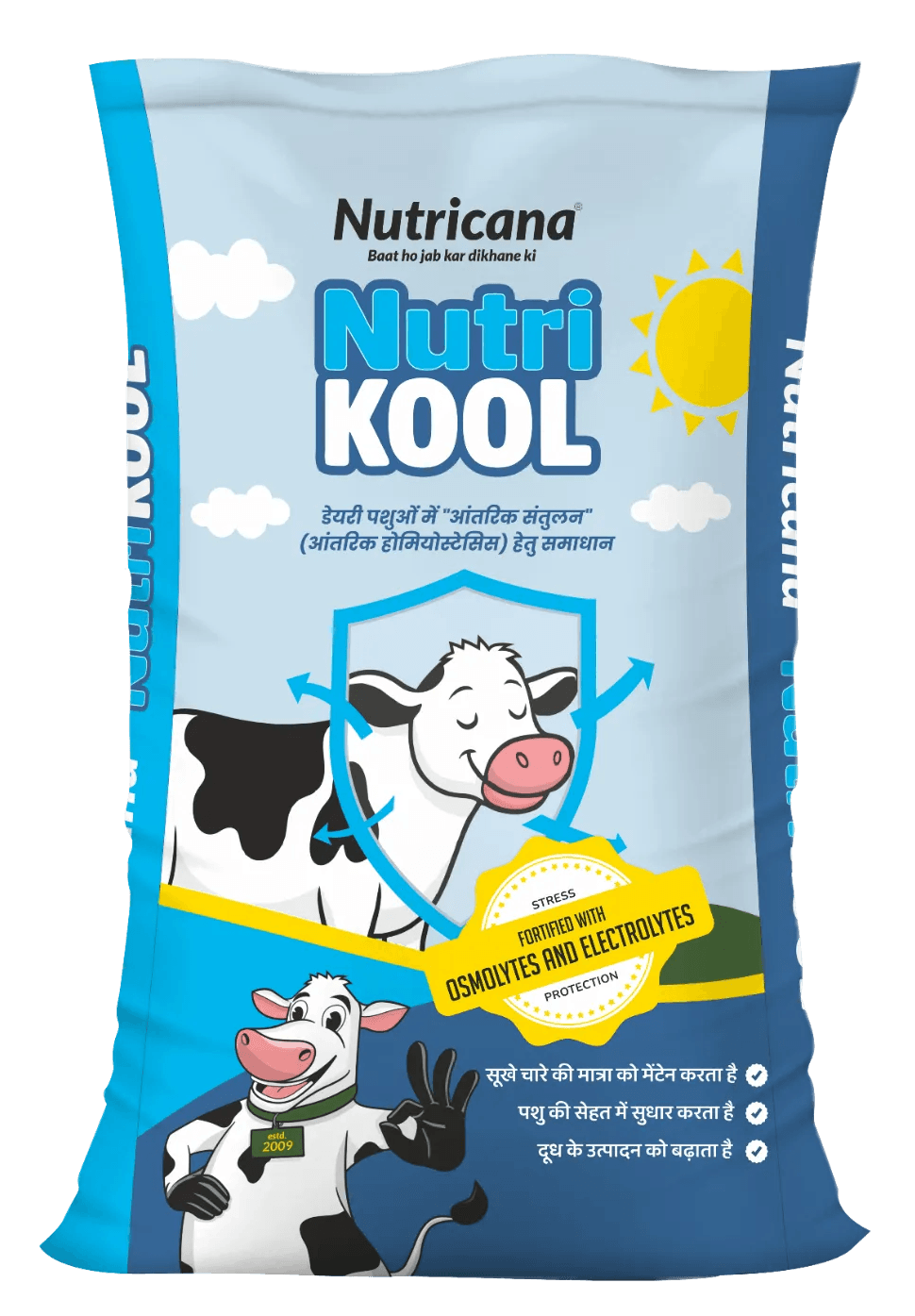
- -NutriKOOL heat stress supplement can limit summer production losses to under 10%
Every summer, dairy farmers across India watch their herd's milk production drop by 15 to 30 percent as temperatures soar above 40 degrees Celsius. Heat stress is not merely discomfort for cattle — it triggers a cascade of metabolic changes that reduce feed intake, impair digestion, and suppress milk synthesis. The good news is that strategic feeding adjustments can significantly mitigate these losses.
Recognizing the Signs of Heat Stress
Cattle begin experiencing heat stress when the Temperature-Humidity Index (THI) exceeds 72. Visible signs include rapid breathing (over 80 breaths per minute), excessive drooling, reduced cud-chewing, standing instead of lying down, and clustering around water sources. Milk yield drops become noticeable within 24 to 48 hours of sustained high THI, and recovery takes several days even after temperatures moderate.
Why Feed Intake Drops in Summer
When body temperature rises, cattle naturally reduce feed consumption to lower metabolic heat production — since digesting feed generates internal heat. Feed intake can decline by 10 to 20 percent during severe heat waves. This creates a vicious cycle: less feed means less nutrients, which means less milk, which means less income for the farmer.
Energy-Dense Feeding: Doing More with Less
Since cows eat less in summer, every kilogram of feed must deliver more nutrients. Increase the energy density of the concentrate by 10 to 15 percent. Nutricana's summer feeding recommendations include using our high-energy formulations that pack more metabolizable energy per kilogram, compensating for reduced intake without requiring the cow to eat more.
Fiber Management During Heat
Fermenting fiber in the rumen generates more heat than fermenting starch. However, cutting fiber too aggressively causes acidosis. The solution is to improve fiber quality rather than reducing quantity. Replace poor-quality wheat straw with better digestible fodder like maize silage or sorghum. Maintain a minimum of 28 percent Neutral Detergent Fiber (NDF) in the total ration, with at least 18 percent from forage sources.
Water and Electrolyte Management
Water requirements increase by 30 to 50 percent during summer. A cow producing 15 litres of milk may need 100 to 120 litres of cool, clean water daily in peak summer. Add electrolyte supplements containing sodium bicarbonate, potassium chloride, and magnesium oxide to buffer rumen pH and replace minerals lost through sweating and panting.
Feeding Schedule Adjustments
Shift the majority of feeding to cooler hours — early morning before 7 AM and evening after 6 PM. Cattle consume 60 to 70 percent of their daily intake during these windows in summer. Offer smaller, more frequent concentrate meals (3 to 4 times daily) to reduce heat of fermentation and maintain stable rumen function.
Practical Summer Feeding Checklist
Ensure shade over feeding areas. Keep water troughs clean and filled at all times. Switch to Nutricana's energy-dense summer ration. Add 30 to 50 grams of mineral-electrolyte supplement per cow daily. Monitor individual cow production and body condition weekly. With these adjustments, most farmers can limit summer production losses to under 10 percent — a meaningful difference in seasonal profitability.
Rajveer Singh
Senior Dairy Advisor
Rajveer Singh is a senior dairy advisor at Nutricana with 12+ years of field experience working directly with dairy farmers across Punjab, Haryana, and Uttar Pradesh. He specializes in herd management and feeding optimization.


