 ਬਲੌਗ ਤੇ ਵਾਪਸ ਜਾਓ
Cattle Feed for Bihar's Growing Dairy Sector: A Complete District Guide
Bihar is quietly emerging as one of India's most dynamic dairy states. With over 3.5 crore cattle and buffalo, the state ranks among the top five milk producers in the country. Yet the per-animal productivity remains well below the national average — a gap that represents both a challenge and a massive opportunity for progressive farmers willing to invest in scientific feeding.
Bihar's Dairy Landscape and COMFED's Role
The Bihar State Milk Co-operative Federation, commonly known as COMFED, has transformed the state's dairy infrastructure over the past two decades. With over 10 lakh farmer-members across 38 districts, COMFED provides a reliable market for milk and has encouraged thousands of smallholders to view dairy as a serious livelihood rather than a side activity. Government initiatives under the Bihar Dairy Mission have further accelerated this growth, offering subsidies on crossbred heifers, milking machines, and feed storage facilities.
Gangetic Plain Advantages
Bihar's geography is a natural asset for dairy farming. The Gangetic alluvial plain that covers most of the state delivers rich, fertile soil ideal for growing berseem, oats, maize, and napier grass — the foundation of quality green fodder. Farmers in districts like Patna, Muzaffarpur, Samastipur, and Gaya benefit from ample irrigation through the Ganga and its tributaries, enabling year-round fodder cultivation. This natural fodder base, when supplemented with balanced compound feed, can push milk yields significantly higher than what traditional feeding achieves.
District-Wise Dairy Potential
Patna district, with its proximity to processing plants and urban demand, leads in commercial dairy adoption. Muzaffarpur and Samastipur in north Bihar form a concentrated dairy belt where smallholders with 1 to 5 cattle collectively produce thousands of litres daily. Gaya in south Bihar has seen rapid growth in crossbred cattle adoption, driven by NGO-supported dairy programs. Begusarai and Vaishali are emerging as secondary dairy hubs, particularly for buffalo milk production.
The Smallholder Reality
The typical Bihar dairy farmer owns 1 to 5 animals — usually a mix of local and crossbred cattle. These farmers traditionally rely on khal-chokar (oil cake and wheat bran) mixed at home, supplemented with whatever green fodder is seasonally available. While this approach keeps costs low, it delivers unpredictable nutrition. A crossbred cow that should yield 12 to 15 litres on balanced feed often produces just 6 to 8 litres on khal-chokar alone, because the homemade mixture lacks consistent protein, energy, and mineral balance.
Transitioning to Compound Feed
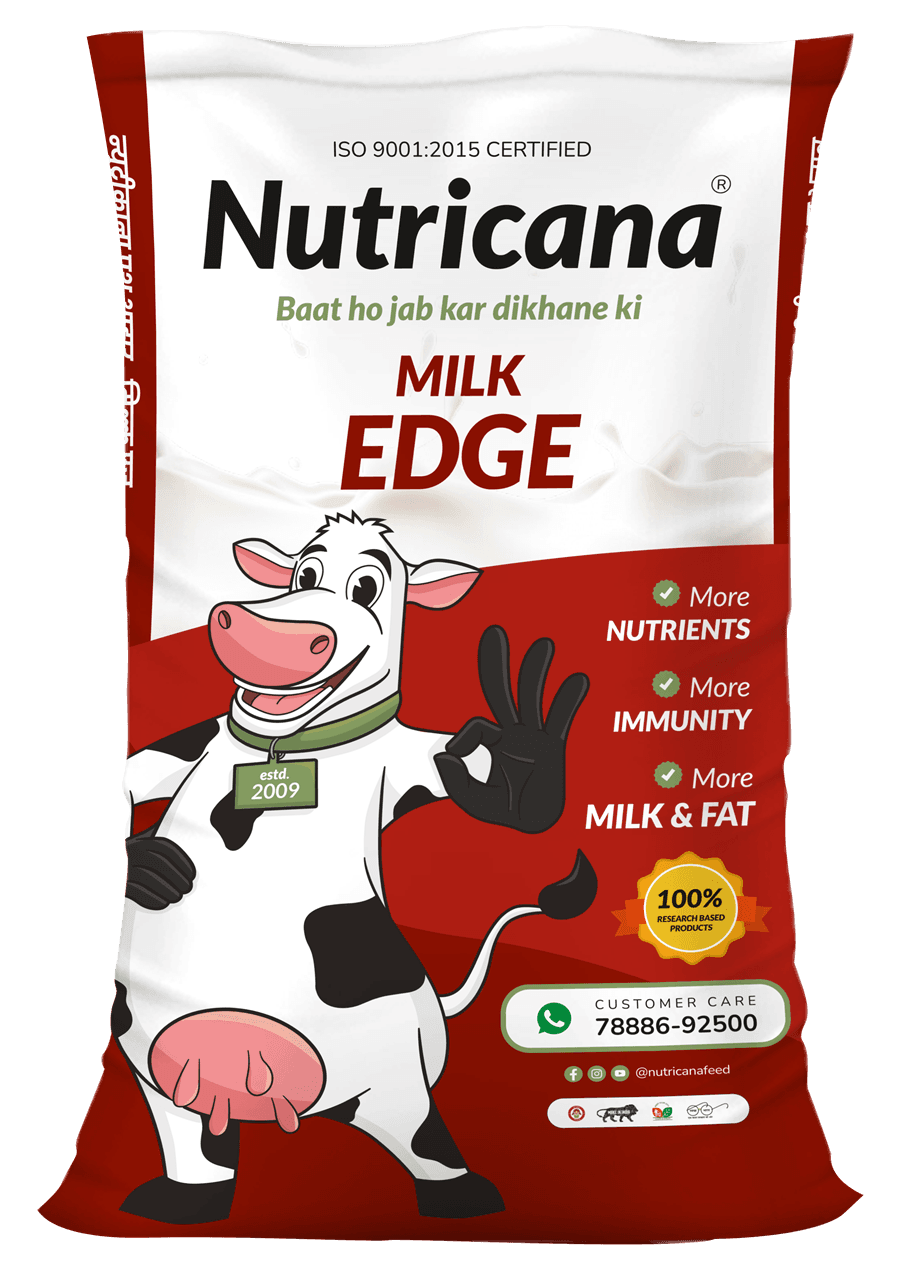
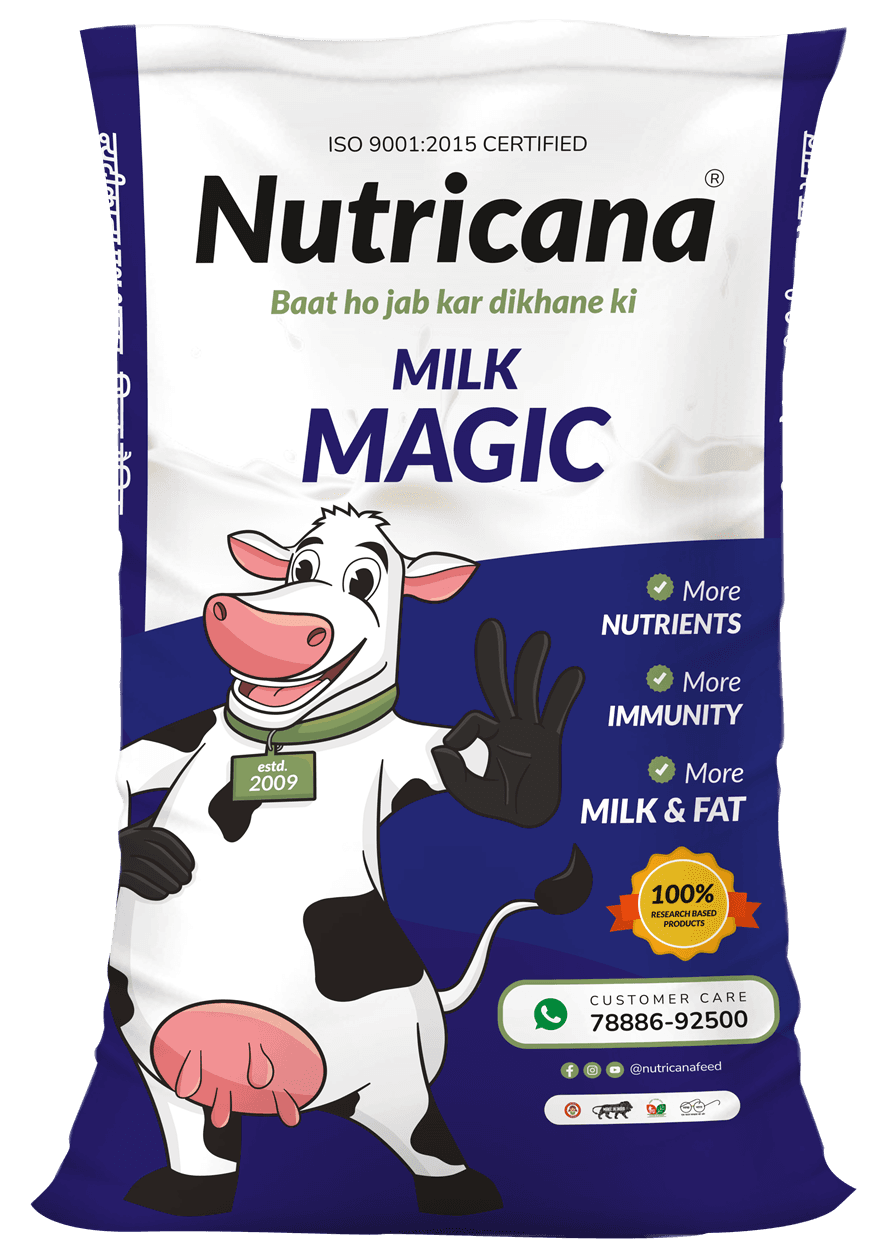
The shift from khal-chokar to scientifically formulated compound feed is the single most impactful change a Bihar dairy farmer can make. Nutricana Milk Edge, designed for cows producing around 10 litres per day, provides 20.5 percent crude protein and balanced minerals at a competitive price point ideal for smallholders. For farmers whose crossbreds are capable of 15 to 18 litres, Nutricana Milk Magic delivers 21.5 percent crude protein with enhanced energy density, supporting higher yields without requiring the farmer to purchase separate mineral supplements.
Feeding Recommendations for Bihar
For a crossbred cow producing 10 litres, feed 4 to 5 kilograms of Nutricana Milk Edge alongside 25 kilograms of green fodder and 3 to 4 kilograms of dry roughage daily. For cows yielding 15 to 18 litres, increase to 6 to 7 kilograms of Nutricana Milk Magic. Always ensure access to 80 to 100 litres of clean water. Divide concentrate into three meals — morning, midday, and evening — to optimise rumen function and nutrient absorption.
Cost-Benefit Reality
At current prices, switching from khal-chokar to Nutricana compound feed adds roughly ₹30 to ₹40 per day to feeding costs for a single cow. However, the additional 3 to 5 litres of milk this generates — worth ₹90 to ₹175 depending on local procurement rates — delivers a net daily profit of ₹50 to ₹135 per animal. Over a 300-day lactation, that translates to ₹15,000 to ₹40,000 of additional income per cow. For a smallholder with 3 cows, the annual income gain can exceed one lakh rupees.
Looking Ahead
Bihar's dairy sector is on an upward trajectory. With COMFED expanding procurement, new private processors entering the market, and government schemes supporting infrastructure development, farmers who invest in nutrition today are positioning themselves for a prosperous tomorrow. Nutricana is committed to serving Bihar's dairy community through an expanding dealer network across Patna, Muzaffarpur, Samastipur, Gaya, and other key districts.
Nutricana Feed Team
Editorial Team
The Nutricana Feed Team combines veterinary science, dairy farming expertise, and nutritional research to bring practical, evidence-based guidance to Indian dairy farmers.


