
 ਬਲੌਗ ਤੇ ਵਾਪਸ ਜਾਓ
How Haryana Farmers Are Boosting Buffalo Milk Fat with Balanced Nutrition
In Haryana's dairy markets, fat is money. Buffalo milk with 7.5 percent fat or above fetches 55 to 65 rupees per litre at cooperative collection centres, while milk testing below 6 percent may barely cross 40 rupees. This 40 to 50 percent price premium makes fat percentage the single most valuable metric for Haryana's buffalo farmers. Across districts like Sirsa, Mahendragarh, Bhiwani, and Rewari, farmers are discovering that balanced nutrition — not genetics alone — is the key to consistently high fat content.
The Science of Fat Synthesis in Buffalo Milk
Milk fat is synthesized in the mammary gland from two precursors. Roughly 50 percent comes from acetate and butyrate — volatile fatty acids produced when rumen microbes ferment dietary fiber. The remaining 50 percent comes from long-chain fatty acids absorbed from the intestine, sourced from dietary fat and mobilized body reserves. This dual pathway means that both roughage quality and dietary fat supplementation directly influence milk fat percentage. Neglect either one, and fat drops.
Dietary Fiber's Role: Why Roughage Cannot Be Compromised
When concentrate exceeds 55 to 60 percent of the total ration on a dry matter basis, rumen pH drops below 6.0. At this acidic pH, fiber-fermenting bacteria are suppressed, acetate production falls, and milk fat declines — a condition known as milk fat depression. Haryana farmers running intensive dairies with heavy grain feeding are particularly vulnerable. The remedy is simple: maintain roughage at a minimum of 45 percent of total dry matter intake. High-quality roughage like berseem, lucerne, or maize silage is far superior to wheat straw alone. A buffalo eating 8 kilograms of concentrate should receive at least 7 to 8 kilograms of dry roughage and 20 to 25 kilograms of green fodder.
Bypass Fat Supplementation: The Game Changer
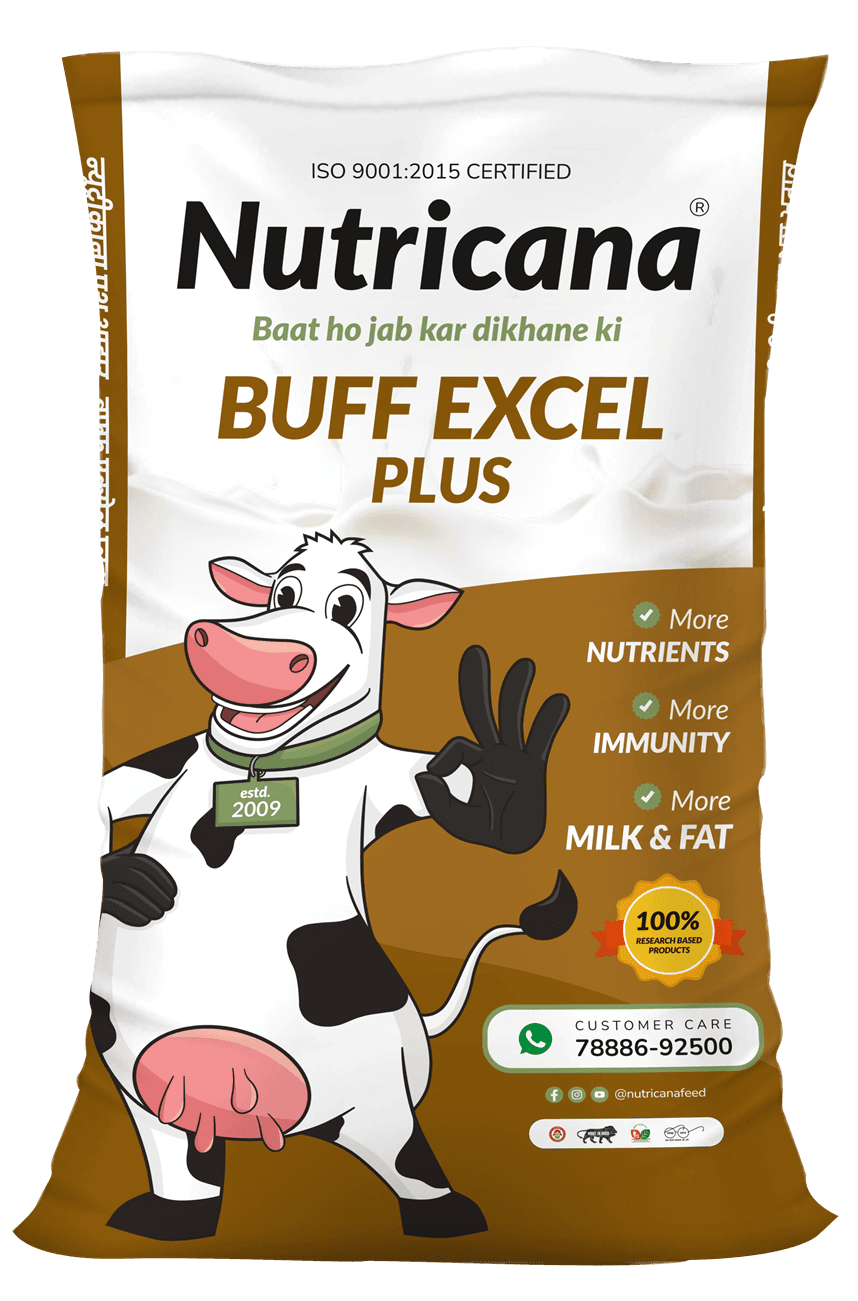
Bypass fat is protected fat that passes through the rumen without being degraded by microbes and is absorbed in the small intestine. This provides long-chain fatty acids directly for milk fat synthesis without disturbing rumen fermentation. In Sirsa and Mahendragarh, progressive farmers supplementing 150 grams of bypass fat daily report fat increases of 0.3 to 0.5 percentage points within two to three weeks. Combined with Nutricana's Buff Excel Plus — which already contains elevated fat levels — this protocol routinely pushes fat above 7.5 percent in Murrah buffaloes.
Practical Feeding Schedule for Fat Optimization
A well-structured daily schedule maximizes fat production. At 5:00 AM, offer 3 to 4 kilograms of concentrate mixed with bypass fat supplement before morning milking. Between 8:00 and 10:00 AM, provide 15 kilograms of green fodder. At noon, offer 3 to 4 kilograms of dry roughage (a mix of wheat straw and treated paddy straw). At 3:00 PM, feed another 3 to 4 kilograms of concentrate. At 5:00 PM, provide the remaining green fodder. At night, keep dry roughage available ad libitum. This pattern ensures continuous rumen fermentation and steady acetate production throughout the day.
Sirsa and Mahendragarh: Leading the Way
Sirsa district has emerged as a model for buffalo fat optimization in Haryana. Farmers here have access to good berseem during winter and make maize silage for summer feeding. The average fat percentage in Sirsa's cooperative collections has risen from 6.8 to 7.3 percent over the past three years, largely driven by adoption of balanced compound feeds and bypass fat supplementation. Mahendragarh, with its drier climate, faces greater roughage challenges but has compensated by investing in chaff cutters and treated straw technology.
Buff Excel Products: Purpose-Built for Fat
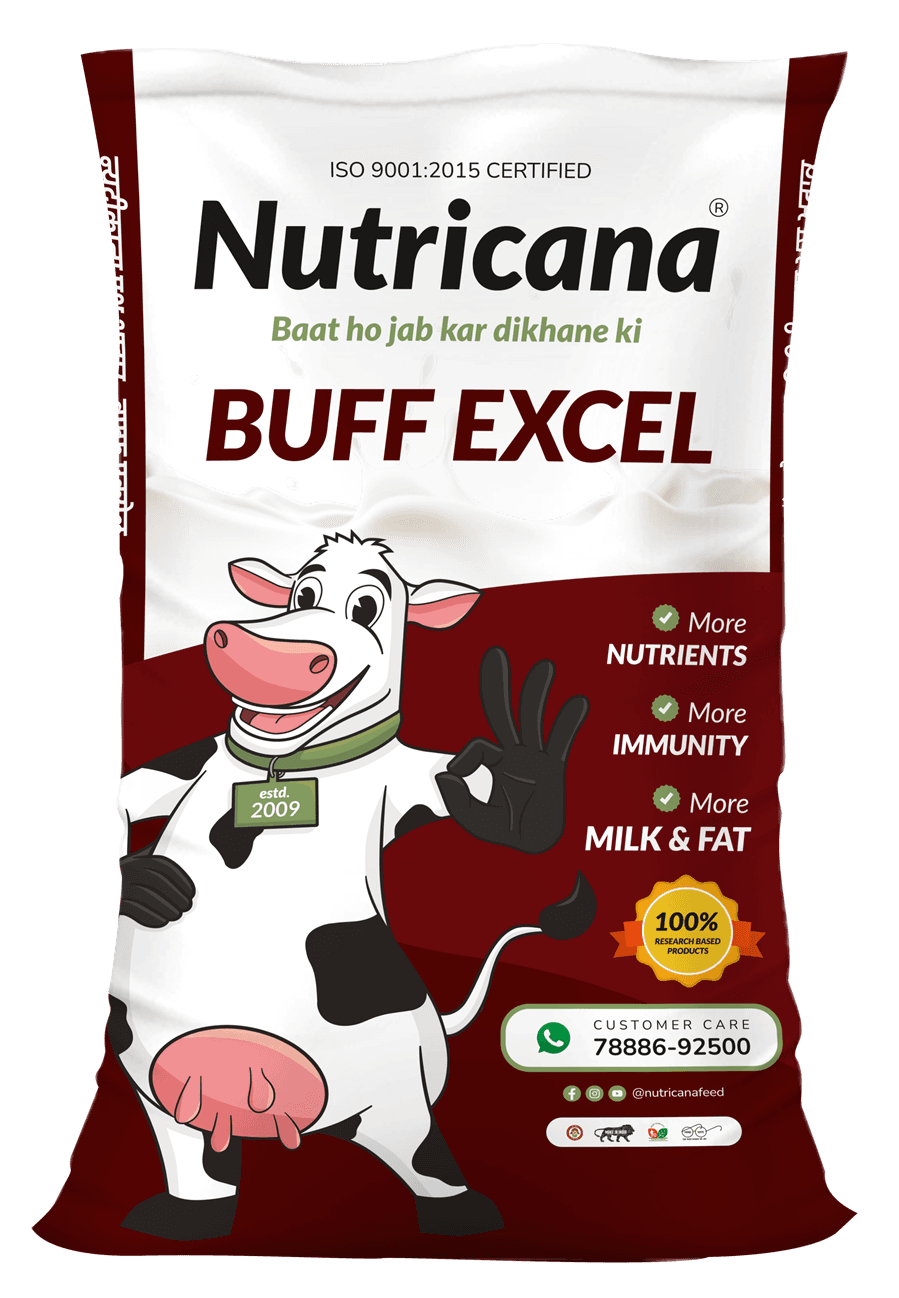
Nutricana's Buff Excel range is designed with Haryana's fat-focused market in mind. Buff Excel at 12-litre yield level provides the baseline nutrition for moderate-producing buffaloes. Buff Excel Plus, formulated for 18-litre-plus animals, delivers higher protein and energy with specific attention to the fatty acid profile that supports mammary fat synthesis. Both products include balanced mineral premixes with zinc and copper — trace minerals that support udder health and prevent the subclinical mastitis that can reduce fat percentage.
What to Avoid
Do not chase fat percentage by restricting water — a persistent myth that dehydrating buffaloes concentrates the milk. Dehydration reduces total yield far more than it increases fat concentration. Do not eliminate all grain — fiber alone cannot sustain high yield. And do not ignore body condition — thin buffaloes mobilize body fat to survive, not to produce milk. Balanced feeding with the right Nutricana product, adequate roughage, and bypass fat supplementation is the only sustainable path to premium fat percentages.
Nutricana Feed Team
Editorial Team
The Nutricana Feed Team combines veterinary science, dairy farming expertise, and nutritional research to bring practical, evidence-based guidance to Indian dairy farmers.


