
 ਬਲੌਗ ਤੇ ਵਾਪਸ ਜਾਓ
The Punjab-Haryana Dairy Corridor: Ambala to Patiala Feed Management Guide
Drive along National Highway 44 from Ambala through Panchkula, cross into Punjab at Mohali, and continue north through Fatehgarh Sahib to Patiala. Along this 120-kilometre stretch, you will pass more high-yielding dairy farms per square kilometre than perhaps anywhere else in India. This is the Punjab-Haryana dairy corridor — a region where average herd yield exceeds 25 litres per animal per day, commercial herds of 50 to 200 animals are common, and dairy farming operates with the precision and investment levels of a modern agri-business.
Cross-Border Synergy
The corridor straddles two states, and the cross-border exchange of knowledge, genetics, and feed is continuous. Haryana's Ambala and Panchkula districts supply many of the elite Murrah buffalo bulls whose semen drives genetic improvement across Punjab. In return, Punjab's cooperative infrastructure — Milkfed's Verka brand processes over 55 lakh litres daily — provides the assured procurement and fair pricing that makes high-input dairy farming viable. Haryana's Vita cooperative and private players like Sterling Agro mirror this on their side. The farmer benefits from competition between buyers, which keeps procurement prices firm at ₹52 to ₹58 per litre for full-cream buffalo milk.
The High-Input Farming Model
In this corridor, dairy farming is investment-intensive. A farmer running 50 Murrah buffaloes averaging 14 litres per day invests ₹35 to ₹45 per litre in feed alone. The concentrate ration runs 7 to 9 kilograms per animal, supplemented with 30 to 35 kilograms of green fodder (primarily berseem in winter and jowar/maize in summer) and 5 kilograms of wheat straw. Total daily feed cost per buffalo ranges from ₹500 to ₹650 depending on season and fodder availability. At 14 litres and ₹55 per litre, revenue is ₹770 per buffalo per day, yielding a feed-cost margin of ₹120 to ₹270. Scale this across 50 animals and the monthly gross margin reaches ₹1.8 to ₹4 lakh — before labour, loan repayment, and veterinary costs.
Progressive Dairy Villages
Certain villages in this corridor have become synonymous with commercial dairying. In Fatehgarh Sahib district, villages near Bassi Pathana operate herds that rival organised dairy farms in productivity. Rupnagar district's belt along the Sutlej canal grows some of the finest berseem in Punjab, supporting year-round green fodder supply. Sangrur district, just south of Patiala, has seen a surge in large-scale dairy investment over the past five years, with farmers building modern loose-housing sheds with automated water systems and TMR mixers. Across the border in Haryana, Ambala's Barara block and Panchkula's Kalka–Pinjore belt house dairy entrepreneurs who serve both Chandigarh's urban milk demand and cooperative procurement routes.
Total Mixed Ration Adoption
The corridor leads North India in TMR adoption. A TMR system blends concentrate, chopped green fodder, dry roughage, and supplements into a uniform mixture, ensuring every bite the animal takes is nutritionally consistent. This eliminates the common problem of cattle sorting — picking out tasty grains and leaving fibrous material — which causes variable rumen pH and inconsistent production. A basic TMR mixer wagon costs ₹3.5 to ₹5 lakh, and farmers report 1.5 to 2 litre yield improvement per animal within 30 days of switching from separate feeding to TMR, purely from improved rumen efficiency.
Automated Milking Economics
Farms above 80 animals are increasingly installing pipeline or parlour milking systems. A four-point herringbone parlour with bulk cooling tank runs ₹12 to ₹18 lakh but replaces four hand-milkers (saving ₹6 to ₹8 lakh annually in wages) and improves milk quality through reduced bacterial contamination, earning premium pricing from processors. Several farms in the Mohali–Patiala belt have achieved Somatic Cell Count levels below 2 lakh — a quality standard that unlocks export-grade processing contracts.
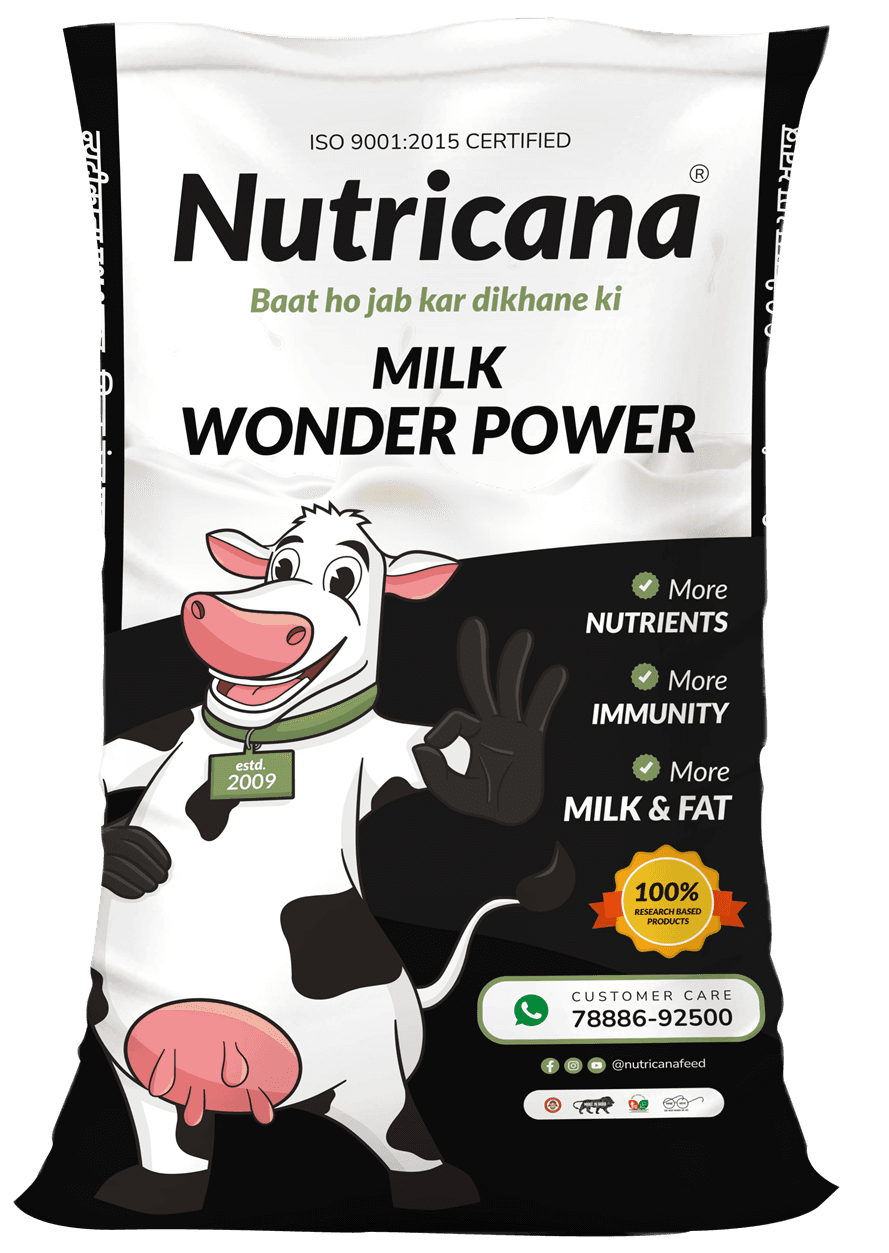
Nutricana Milk Wonder Power for Elite Herds
For buffaloes producing 40 litres or more — and there are hundreds of such animals in this corridor — standard 20 percent protein feed is insufficient. Nutricana Milk Wonder Power is formulated at 24 percent crude protein with elevated bypass protein and chelated trace minerals specifically for these elite producers. At 10 to 12 kilograms per day, it delivers the metabolisable energy and amino acid profile needed to sustain 40-plus-litre production without mobilising excessive body reserves. The feed's palatability ensures consistent intake even during seasonal transitions when animals are prone to going off feed.
Dealer Network Across the Corridor
Nutricana maintains authorised dealers in Ambala City, Panchkula, Mohali, Fatehgarh Sahib, Sirhind, Rajpura, and Patiala, ensuring same-day or next-day delivery for farms across the corridor. Field nutritionists visit large herds fortnightly to review production data, adjust rations, and troubleshoot any feeding issues. This service model — product plus advice — is what separates Nutricana from commodity feed suppliers who drop bags at the gate and disappear.
Nutricana Feed Team
Editorial Team
The Nutricana Feed Team combines veterinary science, dairy farming expertise, and nutritional research to bring practical, evidence-based guidance to Indian dairy farmers.


